
Which Estonian banks support Trustly payments
Does Swedbank, SEB, LHV, Coop Pank or Luminor work at a Trustly casino? Instead of printing a table that goes stale, we teach you a 30-second check at the real point of truth — the casino's deposit page, where Trustly itself renders the supported banks.
The most practical question about Estonian banks and Trustly is always the same one: does my own bank — Swedbank, SEB, LHV, Coop Pank or Luminor — actually work for a casino bank payment? There is an answer, but it is not a static list in somebody's blog. The list of supported banks is per-operator and live: Trustly itself renders it on the casino's deposit page, and it can change over time.
So this article teaches you the method rather than printing a table that goes stale. You will learn how to check your own bank in 30 seconds at the right place, how a bank payment actually works via Smart-ID and Mobiil-ID, what to do when your bank isn't on the list, why the name check rejects a business account, and why a withdrawal always returns to the same account the money came from.
Quick summary
- The only authoritative list of Trustly-supported banks is on the casino's own deposit page. Choose Trustly or bank payment as the method and look at which Estonian banks Trustly shows you.
- The large retail banks — Swedbank, SEB, LHV, Coop Pank, Luminor — are generally common, widely supported choices on the Estonian market, but at any specific operator what counts is what you see on screen.
- The list is per-operator: if one casino doesn't show your bank, another one may. It is worth trying a different Pay N Play casino.
- You always log in inside your own bank's environment with the usual tools: Smart-ID, Mobiil-ID, ID card or a PIN calculator.
- The account must be in your own name. A business account or somebody else's account fails the name check.
- Withdrawals go back to the same account the deposit came from — that is a rule, not a preference.
- A payment can also stall on your bank's own transfer limit or a limit you set yourself, rather than on Trustly.
Why we don't publish a table of Trustly-supported banks
Most articles about Trustly banks solve the question with a single yes/no table: bank on the left, tick on the right. That table may be right on the day it is written and quietly wrong six months later — and a wrong table is worse than no table, because the reader believes it and doesn't verify.
There are three reasons, and they are structural:
- The list is per-operator. The Trustly integration is configured separately at each casino. Two EMTA-licensed casinos can differ on the same bank because they use a different product and country configuration.
- The list changes. Banks and payment service providers add and remove connections, run maintenance and migrate interfaces. Nobody notifies a blogger about that.
- Temporary outages look exactly like "not supported". If a bank's interface is down right now, the bank disappears from the list or throws an error — not because support has ended.
Our promise is verified facts without marketing noise. A list we cannot verify in real time at every operator today is not a verified fact — it is a guess in a pretty table. Instead, we give you a checking method that is always right, because it reads the answer straight from the source.
The only live and binding list of Estonian banks that support Trustly payments is shown on the casino's deposit page when you pick Trustly or bank payment as the method. Trustly itself renders that list, it is per-operator, and it can change. No article, including this one, can replace it — if the screen and the article disagree, the screen wins.
How to check in 30 seconds whether your bank is supported
The check is free, requires neither an account nor money, and goes like this:
- Open the casino site and go to the deposit (cashier) view. At a Pay N Play operator this is the big "Play" or "Deposit" button right on the front page; at a casino with a regular account you have to register first.
- Pick Trustly, bank payment or bank link as the payment method — the wording differs between operators.
- Enter any amount and continue. Trustly's own window opens.
- Look at the list of banks Trustly renders. If your bank is there — Swedbank, SEB, LHV, Coop Pank, Luminor or another — then this casino supports your bank. If it isn't there, it doesn't.
- Don't complete the payment if you don't want to. Until you confirm the transaction in your bank, no money moves anywhere. You can simply close the window.
This five-step check gives you exactly the information a table tries to give — except it is today's, and about the very operator you intend to play at. You can use the same trick before registering, if the operator shows the cashier openly.
What to watch for in the list
Some operators show banks as logos, some in a dropdown, some behind a country selector. If you only see unfamiliar Nordic banks, check that the country is set to Estonia — the wrong country hides the Estonian banks and creates the impression that there is no support.
How the bank link in a casino payment actually works
Here is the part that is stable and genuinely worth understanding, because it also explains most failures.
A bank link at a casino does not mean handing the casino your banking details. The chain goes like this:
- You pick Trustly and your bank at the casino.
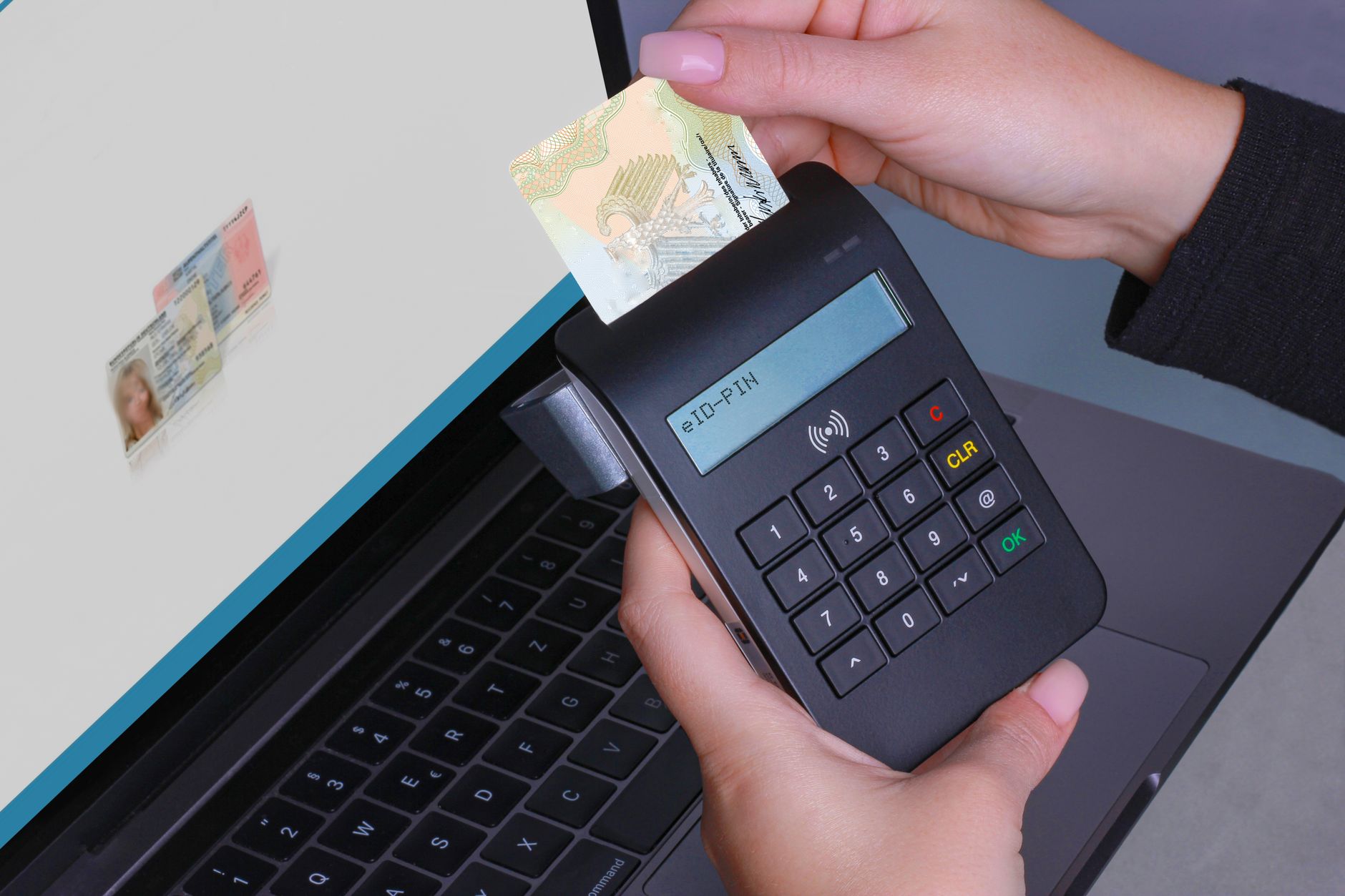
- Trustly redirects you into your own bank's authentication environment. From there you log in exactly as on any other day: Smart-ID, Mobiil-ID, ID card or a PIN calculator.
- You confirm the transfer in your bank. You see the amount and the recipient before confirming.
- Trustly receives the bank's confirmation and tells the casino the money is on its way. Your casino balance usually appears immediately, without the money having physically arrived yet.
What follows from this: the casino never sees your banking password or PIN codes. You enter those in your own bank's environment. Trustly is the regulated intermediary whose job is to tell the bank "this person approved the payment" and to tell the casino "the money is covered". The casino receives the transaction confirmation and the account holder's details, not your authentication tools.
That is fundamentally different from a card payment, where you type the card number onto a payment page. If you want to see the two side by side, read our Trustly vs card payments comparison. We have written out the technical side of the whole chain on the how Trustly works page.
Why Smart-ID matters so much in Estonia specifically
In Estonia, Smart-ID and Mobiil-ID are the reason a casino bank payment is convenient at all: your identity has already been established at state level, and the bank knows who you are. That is exactly what makes the Pay N Play model possible, where the account is essentially created during the payment and a separate document upload for KYC is often not requested at first. A card payment has no such shortcut.
Swedbank, SEB, LHV, Coop Pank and Luminor — what is generally worth knowing
In Estonian retail banking, the volume sits with five names, and those are the ones people ask about most: Swedbank and casinos, SEB and casinos, LHV and casinos, Coop Pank and Luminor. At casinos aimed at the Estonian market these are generally common and widely supported choices — their absence across the whole market would be illogical, because without them a bank payment would make no sense in Estonia.
But note the wording: generally common is not the same as guaranteed at your casino today. The check still happens on the deposit page.
As a footnote, three more are asked about regularly:
- Revolut — Revolut is a bank, but for an Estonian it is often a second account rather than the main one. If you use Revolut, be especially careful that the account is in your name and that you will still have that same account at withdrawal time.
- Citadele and Bigbank — smaller players whose support is the most uneven across operators. This is exactly where it pays to open the cashier before registering.
- Cooperative banks and foreign accounts — if your account is not at an Estonian bank, it may be missing from the list because of the country selector rather than the bank.
None of these observations is a promise. They are expectations that you verify in 30 seconds.

What affects the deposit from the bank's side
| Whether the bank is on the casino's list | Decides whether the payment starts at all. Per-operator and changing — check it on the deposit page. |
|---|---|
| Country selector in the Trustly window | The wrong country hides the Estonian banks. Pick Estonia and the familiar list appears. |
| Account holder | Must be in your own name. The name check rejects somebody else's account and a business account. |
| The bank's daily transfer limit | Blocks the amount quietly on the bank's side. You see an error that isn't the casino's. |
| A limit you set yourself | An online-bank payment limit or an e-commerce restriction does the same — changeable in your online bank. |
| Authentication tool | Smart-ID, Mobiil-ID, ID card or PIN calculator. An expired certificate breaks the payment. |
| Instant payments and weekends | A deposit normally lands at the casino immediately. When a withdrawal lands depends on the bank's instant-payment support and the time of day. |
| Account permanence | The withdrawal returns to the same account. A closed or changed account creates manual handling. |
If your bank isn't on the list
The most important thing to understand here: a missing bank is not a decision about you. It is that operator's configuration. The order worth working through:
- Check the country selector. The most frequent reason Estonian banks "disappear".
- Try again a bit later. Bank interface maintenance looks exactly like missing support.
- Try another operator. The list is per-operator — that is the central fact of this whole article. Our selection of Trustly casinos gives you a basis for comparison.
- Look at an alternative payment method at the same casino. But know that the deposit method often determines the withdrawal method and speed too — depositing by card usually means a slower withdrawal.
- Open an account at a supported bank if you must. That is the last step, not the first — and certainly not for the sake of a free bonus.
What not to do: don't use somebody else's account, even if it belongs to a family member and they say it's fine. It fails the name check, causes frozen money at withdrawal time, and under many casinos' terms it is an outright breach.
The name check, joint accounts and business accounts
The rule that applies everywhere, and whose breach causes the most pain: the bank account must be in the player's own name. Trustly passes the account holder's name and the IBAN identifier to the casino, and the casino compares that with the name on the player account. If they don't match, either the payment doesn't go through or — worse — the deposit goes through and the withdrawal gets stuck.
Three cases people ask about:
- A business account (a company account). Doesn't work. The account holder is a legal entity, not you, and the name check makes that difference plain. Even if you are the sole shareholder and board member, you are not the account holder — the company is. Don't try it even if the deposit appears to succeed at first: it will certainly surface at the withdrawal stage.
- A joint account. Usually works if you are one of the account holders and authenticate with your own tools. The risk sits at withdrawal: the money returns to a joint account that another person can also access. That is a private-life question more than a technical problem, but it is worth thinking through.
- An account used under a power of attorney or as a co-owner. It is not your account as far as the name check is concerned. Same outcome as a business account.
The casino doesn't run this check to torment you. It is an anti-money-laundering and identity requirement that goes hand in hand with verification.
Bank-side limits and why a payment fails
If the bank is on the list, the account is in your name, and the payment still fails, the culprit is almost always a limit — and often your own.
- The bank's daily transfer limit. Every bank has defaults for how much you can transfer out per day. A larger deposit can exceed them.
- The e-commerce or online payment limit. For many people this is separate in the online bank and set low — as it should be.
- A restriction you set yourself. If you voluntarily lowered your payment limit, it is doing exactly what you asked it to. That is not a bug.
- The state of your authentication tool. An expired ID card certificate or a half-finished Smart-ID renewal breaks the confirmation.
Notice one thing: when a limit says no to you, that is usually good news rather than an obstacle to be overcome. Before you go into your online bank to raise a limit purely to push a bigger deposit through, it is worth asking whether that amount was a plan or a momentum. We discuss the concept of a limit at more length here.
A second note: when a payment fails, the money is almost always still in your account or comes back to it — the bank link doesn't let money "vanish". A failed payment means a broken confirmation, not lost money.
The withdrawal returns to the same account
This is probably the most important sentence in the whole article, and the one most often misunderstood: the money goes back to exactly the bank account the deposit came from. That is not a casino preference and not a negotiating point. It is an anti-money-laundering principle called the closed loop: money must return where it came from.
Practical consequences:
- Don't deposit from an account you intend to close. Changing banks between playing and withdrawing means manual handling and documents.
- Don't deposit from one bank hoping to withdraw to another. You can't, and asking won't help.
- If the account has been closed in the meantime, the payment bounces and from there it goes the customer support and evidence route. It is solvable, but slow and tedious.
On speed: the transfer itself is usually fast, but the actual wait mostly comes from the casino's own approval step and first-time identity verification, not from the bank. Some operators process withdrawals manually and in batches, which adds hours. Estonian banks' instant-payment support means that once the casino has approved its side, the money generally lands quickly in the evening and at weekends too — but that assumes the casino's side is done. We have written out concrete expectations in the article on Trustly withdrawal times; which operators genuinely do it fast, you can see on the fast withdrawals page.
The bank is only half the story. The other half is how quickly the operator approves your withdrawal. Our comparison looks at exactly that step — without the marketing noise.

Responsible gambling
In Estonia the minimum gambling age is 21, and supervision is carried out by the Estonian Tax and Customs Board (EMTA). Play only at an EMTA-licensed operator and only with money whose loss will not change your life.
This article's topic — bank limits — is directly relevant to that. Your bank's transfer limit and the casino's own deposit limit are two free tools that keep working even when your judgement isn't at its best. Set them in advance, in a calm moment. We have written out how to do that in practice in the article on responsible gambling and limits, and you'll find the concept itself in the glossary: limit.
If you feel the game is no longer under your control, help exists and it is free. Gambling addiction counselling is available in Estonia — reaching out is not a failure.
Frequently asked questions
Which Estonian banks support Trustly payments?
The exact list depends on the specific casino and changes over time, which is why we don't publish a stale table. The large retail banks — Swedbank, SEB, LHV, Coop Pank, Luminor — are generally widely used choices on the Estonian market. You get a definite answer in 30 seconds: open the casino's deposit page, pick Trustly or bank payment, and look at which banks Trustly shows you. That list is authoritative and live.
Does a Swedbank casino deposit work with Trustly?
Swedbank is Estonia's largest retail bank and a generally common choice at casinos aimed at the Estonian market, but we don't state that as a fact about any specific operator. Check it yourself: pick Trustly in the cashier, make sure the country is Estonia, and look at the bank list. If Swedbank is there, it works. If not, try another operator — the list is per-operator.
Why isn't my bank on the Trustly list?
The three most likely reasons, in order: the wrong country in the Trustly window (not choosing Estonia hides the Estonian banks), temporary maintenance of the bank's interface, or simply that this operator hasn't configured that bank. The last is common — try a different casino. A missing bank is not a decision about you or your account.
Does the casino see my banking password when I use a bank link?
No. You authenticate inside your own bank's environment with Smart-ID, Mobiil-ID, an ID card or a PIN calculator. The casino never sees your passwords or PIN codes. Trustly is the regulated intermediary: the bank confirms to it that you approved the payment, and it confirms to the casino that the money is covered. The casino receives the transaction confirmation and the account holder's name, not your authentication tools.
Can I use a business account or a family member's account?
No. The bank account must be in your own name. A business account's holder is a legal entity, not you, and the name check will reject it — if not at the deposit, then certainly at the withdrawal. Somebody else's account is on top of that an outright breach of most casinos' terms and likely means a stuck withdrawal. A joint account usually works if you are one of the holders.
Can a withdrawal go to a different bank account than the deposit?
No. The money returns to exactly the account the deposit came from. This is the closed-loop principle of anti-money-laundering rules, not a casino preference, and it cannot be negotiated with support. So don't deposit from an account you intend to close or change — switching banks in between means manual handling and extra documents.
Why does a casino bank payment fail even though the bank is on the list?
Most often because of a limit: the bank's daily transfer limit, the online bank's e-payment limit, or a restriction you set yourself voluntarily. The second common reason is the authentication tool — an expired ID card certificate or a half-finished Smart-ID renewal breaks the confirmation. No money disappears because of this: a failed payment means a broken confirmation, not lost money.
Does a Trustly payment arrive at the weekend?
A deposit lands on your casino balance immediately as a rule, including at night and at weekends. For withdrawals, Estonian banks' instant-payment support is good, so once the casino has approved the transaction on its side, the money usually arrives quickly regardless of the day of the week. The bottleneck isn't the bank but the casino's approval step and first-time identity verification — some operators process withdrawals manually and in batches.