
Trustly vs Visa and Mastercard at online casinos
Trustly vs bank card: speed, security and bonus eligibility side by side. We compare how each payment rail works mechanically, where withdrawals diverge, and when to pick Trustly versus Visa or Mastercard.
Trustly vs a bank card is the most common choice an Estonian player faces the moment a casino's payment methods page appears: confirm the payment inside your own online bank with Smart-ID or Mobiil-ID, or type in your Visa or Mastercard details. Both are legitimate casino deposit methods, both land on your gaming account almost instantly — and yet they are not the same thing. The difference only surfaces once money starts moving back, once you look at which data you handed to whom, and once your card issuer attaches its own price tag to the deposit.
This article compares the two payment rails side by side: how each works mechanically, how fast deposits and withdrawals are, what each exposes about you, how fees work, whether bonuses apply to both, what a chargeback actually means, and why only one of them can do Pay N Play. Cards are not the villain here — they have real advantages a bank payment does not cover. The goal is to say honestly when each one is worth choosing.
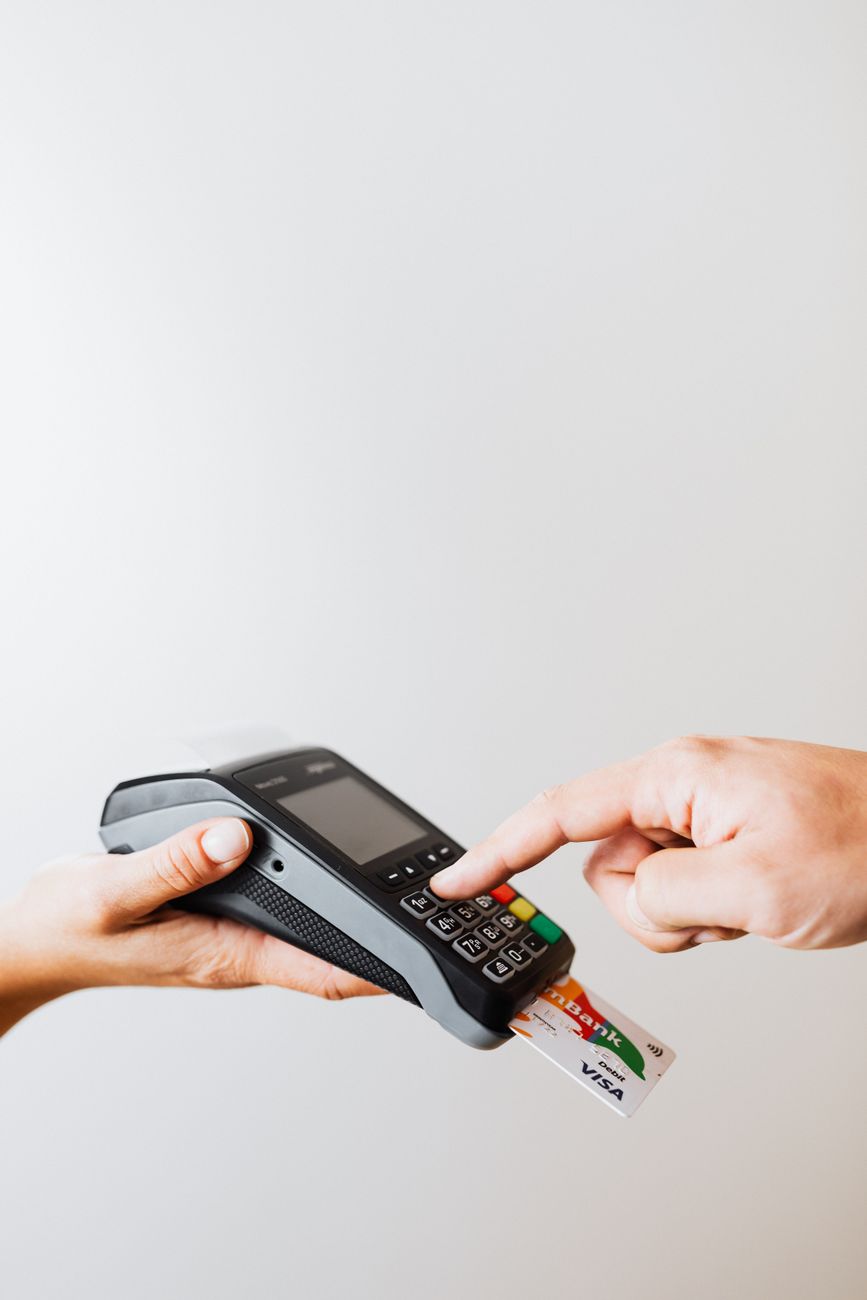
Quick summary
- Deposit speed is effectively a tie. Both a bank payment and a card payment usually reach your gaming account within seconds. Anyone asking which is faster gets a boring answer: both.
- Withdrawals are where the rails diverge. Money returning to a card travels through the card network and typically lands within business days; an account-to-account return is generally faster.
- Data: with a card payment you hand the casino your card details; with Trustly the casino never sees your card number at all — you authorise the payment inside your own bank's environment.
- Fees: a Trustly deposit is usually free for the player, but the operator decides. With a card, your issuer is the deciding factor — some banks have historically treated gambling deposits as cash advances.
- Bonuses normally apply to both. The classic exclusion is the e-wallet, not the card.
- A chargeback is not a way to claw back lost money — that misunderstanding ends with a closed account.
- Only the bank rail can do Pay N Play. A card cannot collapse signup and identity checks into the deposit.
How Trustly and a bank card work technically
The most important difference is neither speed nor fees, but who actually authorises the payment. Once that is clear, everything else follows logically.
Trustly: account to account inside your own bank
Trustly is an account-to-account bank transfer intermediary. When you choose Trustly at a casino, your own bank's environment opens — Swedbank, SEB, LHV, Coop Pank or Luminor — and you confirm the payment exactly as you would any other transfer: with Smart-ID or Mobiil-ID. The casino never sees your passwords or a payment instrument number; it receives confirmation that the payment was authorised, and the deposit lands on your account. Which Estonian banks are supported we have covered separately: Estonian banks and Trustly. The full chain step by step lives on the how Trustly works page.
Card: an authorisation inside the card network
A card payment travels a different rail. You type your card number, expiry and security code into the casino's (or its payment provider's) form, the request goes out to the card network — Visa or Mastercard — and on to the bank that issued your card, which says yes or no. These days a strong authentication step is added, which is why you often see the very same Smart-ID or banking app confirmation. On the surface it looks identical to a bank payment, but underneath it is an authorisation against your card account, not a transfer from your current account.
That single difference — bank versus card network — explains every difference that follows: withdrawal speed, data, fees and Pay N Play.

Deposit speed: which one is faster?
The honest answer: neither is meaningfully faster. Both Trustly and a Visa or Mastercard deposit are built to work in real time, and the money usually appears on your gaming account within seconds. When a deposit is delayed, the payment rail itself is almost never the culprit — something else is: a technical glitch at the casino, an exceeded limit, or a decline from your issuer.
Where a small practical difference does appear is friction, not speed:
- With a card you need the card in hand, or the details saved. If the card is in a wallet at home and you are on a bus, a bank payment is more convenient.
- With Trustly you need to bank with a supported institution, and Smart-ID or Mobiil-ID has to be available. If your bank is not on the list, this rail simply does not exist for you.
- A card works abroad and at practically any casino; a bank payment assumes the casino has connected the banks of your specific market.
In other words: in the deposit chapter, the winner is whichever method is currently within reach. The real comparison starts at withdrawal.
Withdrawal speed — this is where the rails part ways
This is the most important section of the article. The withdrawal is where the two payment rails genuinely behave differently.
Back to a card: through the card network
When you withdraw winnings to a card, this is not an ordinary transfer. The money travels back along the same card scheme it came in on, and that rail was built for sales transactions, not for fast refunds. In practice this means the casino may approve the payout today, but it will only become visible on your card account or statement business days later. The silence in between does not mean something is broken — the money is simply moving through a slow pipe.
Back to an account: generally faster
An account-to-account return does not have to cross the card network and typically arrives sooner — often the same day, and at fast casinos within hours or minutes. But here we have to be honest: the rail's speed is not what usually decides your wait. What decides it is the casino's own approval step and first-time KYC. Some operators review withdrawals manually and in batches; then even the fastest rail is forced to stand in a queue. We have written this out in more detail here: Trustly withdrawal times.
In short: the bank rail gives you a faster pipe, the casino gives you a faster decision. You need both.

Trustly vs Visa and Mastercard side by side
| What it actually is | Trustly: an account-to-account bank transfer. Card: an authorisation in the card network against your card account. |
|---|---|
| Who authorises the payment | Trustly: you, inside your own bank's environment via Smart-ID or Mobiil-ID. Card: the issuing bank, usually plus strong authentication. |
| Deposit speed | Both effectively instant — seconds. There is no meaningful difference here. |
| Withdrawal speed | Card: via the card network, typically business days. Account: generally faster, often the same day. The casino's approval and KYC decide the real wait either way. |
| What data reaches the casino | Trustly: no card number exists at all; the casino receives a confirmation and the account holder's details. Card: number, expiry and security code travel to the casino's payment page. |
| Fees for the player | Trustly: usually free, but the operator decides. Card: depends on your issuer — some have treated gambling deposits as cash advances. Check your own bank's terms. |
| Bonus eligibility | Both are normally eligible. The classic exclusion is the e-wallet, not the card. |
| Chargeback | A card carries dispute rights for commercial transactions. This does NOT cover money lost gambling. A bank payment has no such mechanism. |
| Pay N Play | Bank rail only. A card cannot collapse account creation and identity verification into the deposit. |
| Availability | Card: works almost everywhere, including abroad and at casinos that do not connect Estonian banks. Trustly: only for customers of supported banks. |
| Limits | Both have a ceiling from the casino and from the bank. A card is capped by your issuer's limit, a bank payment by your own account limit. Figures vary — check the terms. |
A secure casino payment method: what each one exposes about you
Both rails are secure in the sense that encryption and regulated intermediaries are in place. The question is not which one is "hackable", but how much you hand over in the first place.
With a card payment, the card number, expiry date and security code travel to the payment page of the casino or its payment provider. A decent operator does not store them itself — the data is tokenised — but the data exists and moves. Your exposure grows: if card details ever leak, they can be used to pay somewhere else.
With Trustly that risk simply never arises. You do not enter payment details into the casino, but into your own bank, whose environment you already trust. The casino never gets your card number, because there is no card. A side benefit: since the payment comes from a bank account in your name, the account holder's details are bank-verified — which usually speeds up later verification.
A card payment hides your data behind good encryption. A bank payment never hands it over at all. The difference is not in the strength of the protection, but in how much there is to protect.
So the honest answer to the "secure payment method at a casino" question is: a bank payment leaves a smaller data footprint, while a card payment gives you dispute rights and broader availability in return.
Fees: the most likely place a card surprises you
This needs to be said carefully, because terms change and every bank decides for itself. But the general picture is stable and worth knowing.
A bank payment is usually free for the player — it is an ordinary transfer from your own account. The final word still belongs to the casino: in theory an operator could charge a deposit fee, although in a competitive market that is rare. Check the casino's payment methods page.
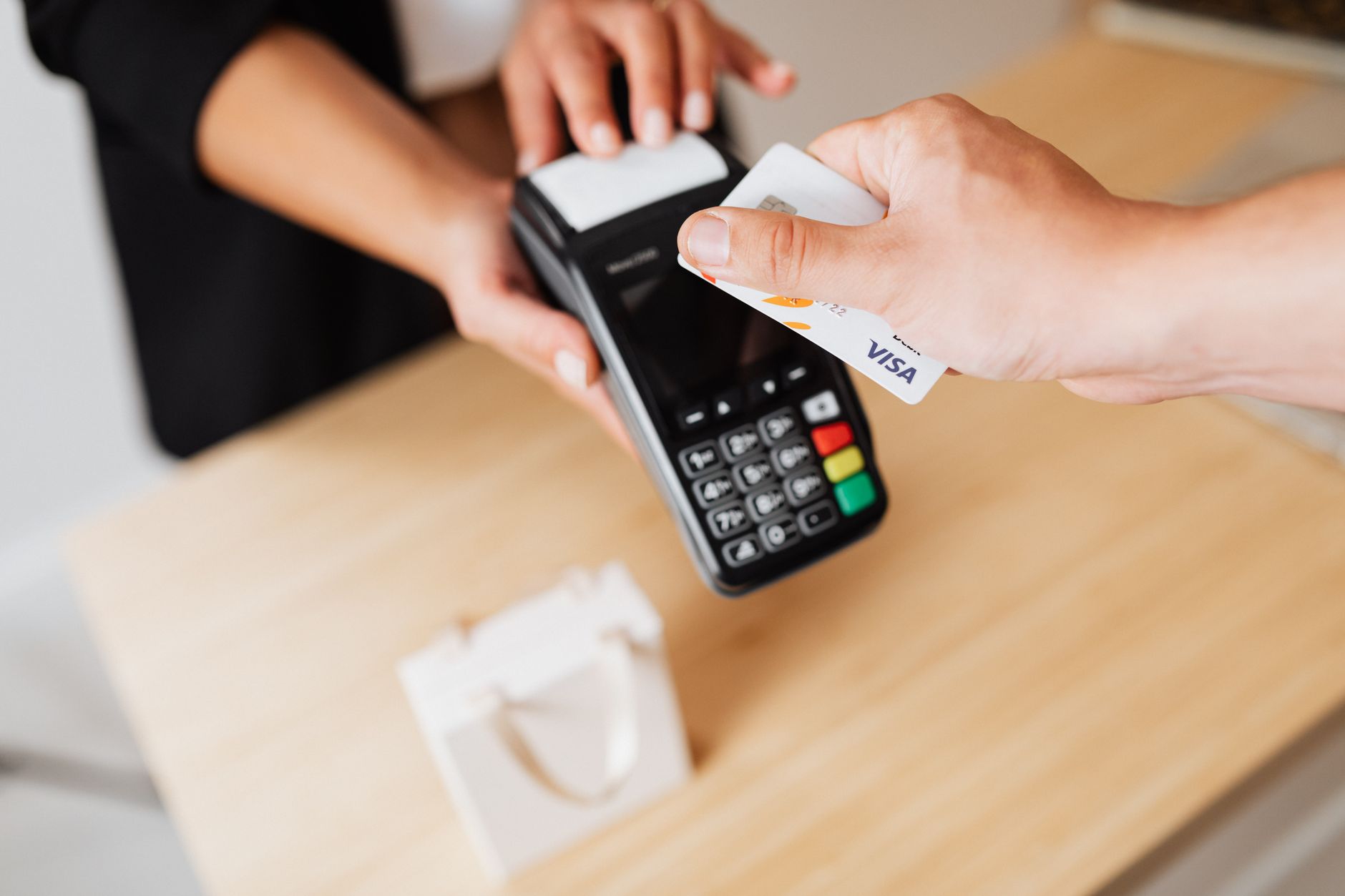
With a card payment, the question is not the casino but your card issuer. Some banks have historically classified gambling deposits not as ordinary purchases but as cash-advance-like transactions. If your issuer does that, a deposit made from a credit card can mean a fee and interest accruing immediately, with no interest-free period. Whether and how your bank currently does this is a question for your own bank's terms — we do not know it on your behalf, and no casino will tell you upfront. If you use a credit card, this is one concrete thing to check in your bank's price list before your first deposit. With a debit card the risk generally does not arise, since the cash-advance logic is not applied in the same way.
The second fee spot is currency. If the casino settles in something other than euros, conversion is added — this affects both rails, but it is more common with cards, because a card works across borders.
The most common and most expensive misconception about card payments: because a card carries dispute rights, money lost at a casino can be claimed back. It cannot. A chargeback is meant for situations where the transaction never happened, the goods never arrived, or the card was used fraudulently. With a casino deposit, the service was delivered: you received money on your gaming account and you played it. A loss is not a defect. If you dispute a valid deposit, the casino loses money and will almost certainly react the same way: the account is closed, the balance frozen, you are added to lists that operators share among themselves, and future accounts stay unopened. This is a serious step, not a minor infraction. If you feel you played more than you intended, the right tool is a limit or self-exclusion, not a dispute. In a case of genuine fraud - someone used your card without your knowledge - a dispute is of course justified, and you should contact your bank immediately.
Bonus eligibility and limits: does the payment method take your bonus away?
This is a justified fear, but usually aimed at the wrong method.
The bonus
Both a bank payment and a card payment are normally eligible for a welcome bonus. The classic exclusion in casino terms is the e-wallet — methods like Skrill and Neteller are often excluded from bonuses, because they have historically been used for bonus abuse. Trustly and cards generally do not land on that list. Even so, the rule we repeat at every opportunity applies: read the terms and conditions before depositing, because the exclusion list is the operator's decision and can change. How a bonus works with a bank payment in practice is written out separately: Trustly deposits and the welcome bonus.
Limits
Both rails have two ceilings: the casino's own and your bank's. A card is capped by your issuer's per-transaction and daily limits; a bank payment by your own online banking transfer limit — which, incidentally, you can set yourself, making it a good spending-control tool by default. If a deposit does not go through, an exceeded limit is a more likely explanation than "the method is broken".
The same-method rule
A rule that surprises new players applies to both rails: a withdrawal generally has to return via the same method you deposited with. Deposit by card, and the winnings come back to the card — card network waiting time included.
Pay N Play: the one thing a card simply cannot do
If you are looking for a reason why the bank rail exists at all, this is it. At a Pay N Play casino you do not register separately: the first deposit is the registration. Because the payment comes from a bank account in your name, the casino receives your personal details bank-verified — name, personal identification code, account. The registration form, the email confirmation and the uploading of document photos all disappear; play starts within minutes.
A card fundamentally cannot do this. A card payment tells the casino that someone authorised the transaction — it does not carry a bank-verified identity in a form usable for KYC. That is why with a card the classic path always remains: register an account, prove later who you are. The difference between the two models is written out here: Pay N Play vs a regular account.
This is not a flaw in the card — it is simply what the card network does and what it does not do.
Trustly vs card: the strengths and weaknesses of each
Pros
- Trustly: the card number never reaches the casino — a smaller data footprint
- Trustly: withdrawals do not have to cross the card network and generally arrive sooner
- Trustly: you confirm the payment in your bank's familiar environment via Smart-ID or Mobiil-ID
- Trustly: usually free for the player, and no cash-advance risk arises
- Trustly: the only rail that enables the fast Pay N Play start
- Card: works at practically any casino, including those that do not connect Estonian banks
- Card: functions abroad and in other currencies
- Card: familiar and everyone has one — your bank does not need to be on a supported list
- Card: dispute rights protect you in cases of genuine fraud
Cons
- Trustly: only works if your bank is supported
- Trustly: requires Smart-ID or Mobiil-ID
- Trustly: there is no dispute mechanism
- Card: withdrawals travel through the card network and typically take business days
- Card: card details travel to the casino's payment page
- Card: on a credit card the issuer may treat the deposit as a cash advance — fee and interest immediately
- Card: does not allow a Pay N Play style instant start
- Card: conversion fees at a cross-border casino
When to choose Trustly and when to choose Visa or Mastercard
The theory is done; here are the situations and the answers.
Choose a bank payment if:
- Withdrawal speed is your priority. If you want the winnings on your account today rather than after a business day, the account-to-account rail is the right choice. The fastest operators are gathered together with the method here: fast withdrawals.
- You do not want to spread your card details around. Less data handed out means less to worry about later.
- You want to start playing immediately. With Pay N Play the registration and the initial paperwork dissolve into the deposit.
- You use a credit card and do not want cash-advance logic. A bank payment comes from your current account, and the question never arises.
- You want spending control. Your online banking transfer limit is in your own hands.
Choose a card if:
- Your bank is not supported. Then there is no choice — and that is perfectly fine.
- The casino does not connect Estonian banks. At an international operator, a card is often the only sensible rail.
- You are abroad or playing in another currency. The card was built to cross borders.
- You do not have Smart-ID or Mobiil-ID at hand right now.
- Deposit convenience matters more than withdrawal speed. If you play with small amounts and rarely withdraw, the card network's waiting time is a theoretical problem for you.
And a perfectly sensible hybrid: many players deposit with whatever is at hand but prefer to withdraw to an account. Just remember that the same-method rule may make that choice for you.
The rail's speed is only half the equation — the other half is the casino's own approval step. Our fast withdrawals page ranks operators by what they actually do, not by what they promise.

Responsible gambling
Neither payment rail makes gambling safer — both make moving money easy, and that is exactly the point at which it is worth slowing yourself down. A fast deposit is only a convenience when the amount was planned anyway.
Set a limit before you play, not in the middle of it: a deposit and loss limit on your casino account, a transfer limit in your own online bank, and a time limit if needed. Only play with money whose loss will not change your month. If you feel control slipping, use self-exclusion — it is a tool, not a failure. We have gathered the practical steps here: responsible gambling and limits.
In Estonia gambling is permitted from the age of 21, and it is regulated by the Estonian Tax and Customs Board (EMTA). Free help and advice are available from the addiction helpline 1707.
Frequently asked questions
Trustly vs bank card — which is faster?
For deposits they are practically equal: both reach your gaming account within seconds. For withdrawals a bank payment is generally faster, because the money does not have to cross the card network — a payout to a card typically appears within business days. The real wait, however, is decided by the casino's approval step and first-time identity verification, not the payment rail.
Is Trustly safer than Visa or Mastercard?
Both are secure and regulated. The difference is the data footprint: with a card payment the number, expiry and security code travel to the casino's payment page, while with Trustly you confirm the payment in your own bank's environment and the casino never sees a card number — there isn't one. Less data means less risk if anything ever leaks.
Does a casino deposit by card cost anything?
The casino itself rarely charges for a deposit. The deciding factor is your card issuer: some banks have treated gambling deposits as cash-advance-like transactions, which on a credit card can mean a fee and interest accruing immediately. Whether your bank does this today you will only find in your own bank's price list — check before your first deposit.
Will I get the welcome bonus with a card too?
Usually yes. Both bank payments and Visa or Mastercard are bonus-eligible at most casinos. The classic exclusion is the e-wallet, for example Skrill and Neteller. Because the exclusion list is each operator's own decision and can change, read the bonus terms and conditions before you deposit — afterwards is too late.
Can I get money lost at a casino back with a card chargeback?
No. A chargeback is meant for situations where the transaction never happened, the goods never arrived, or the card was used fraudulently. With a casino deposit the service was delivered, and a loss is not a defect. Disputing a valid deposit will almost certainly end in a closed account and inclusion on lists shared between operators. If losses worry you, the right tool is a limit or self-exclusion.
Why can't I pay by card at a Pay N Play casino?
Because the Pay N Play model relies on the payment coming from a bank account in your name, with the bank confirming your identity to the casino — that is how the deposit replaces registration and initial verification. A card payment only says that the transaction was authorised; it does not carry bank-verified personal details. With a card, the ordinary path of registering and proving yourself later always remains.
Does a withdrawal have to use the same method I deposited with?
Generally yes — it is a common rule driven by anti-money-laundering requirements. If you deposited by card, the withdrawal also goes back to the card, card network waiting time included. That is exactly why the payment method is worth thinking through at the moment of your first deposit, not once the winnings are on your account and you want them quickly.
Which casino payment method should I choose if my bank isn't on Trustly's list?
Then a card is a perfectly sensible choice and there is nothing wrong with it. A card works at practically any casino, including international ones that do not connect Estonian banks. Just account for the card network's payout waiting time and check your issuer's terms. It is also worth looking at which Estonian banks are supported at all — the list changes over time.